Product Development
Utah Contract Sewing
•
August 13, 2026
7 min read
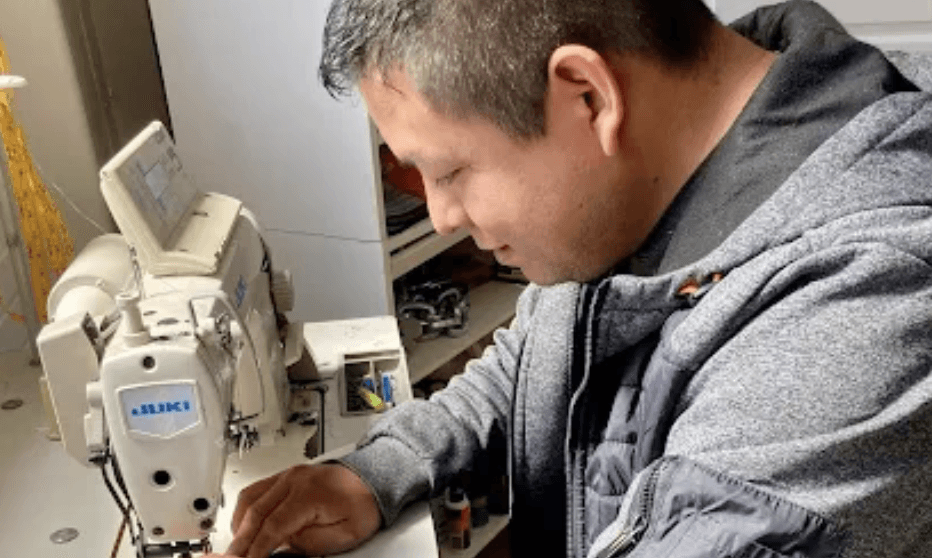
WHY PROTOTYPE DOMESTICALLY?
Prototyping a soft goods product in the United States offers several practical advantages.
Working with a domestic development team allows for more immediate communication, faster feedback, and easier access to physical prototypes. Clients can review materials, evaluate construction, test functionality, and discuss revisions without navigating large time-zone differences or lengthy international shipping schedules.
This collaborative process can save time, reduce misunderstandings, and help identify problems before a product enters manufacturing.
PRODUCTS SUITED TO DOMESTIC PROTOTYPING
Domestic development can be especially valuable for new inventions and products that require hands-on testing.
Common examples include:
Backpacks and bags
Outdoor equipment
Protective covers
Harnesses and carrying systems
Specialty sewn products
Hybrid soft-and-hard goods
Products with new or unconventional functions
These products often require several interconnected decisions involving fit, materials, hardware, construction, usability, and manufacturing methods.
FROM IDEA TO A TESTABLE PRODUCT
The process begins by defining the product’s purpose and identifying the problem it needs to solve.
Early conversations may address:
The intended customer
Primary product functions
Use conditions
Target pricing
Expected production quantities
Performance requirements
Materials and construction
Competing or related products
With these goals established, the team can begin exploring possible solutions through research, brainstorming, sketches, material selection, and preliminary construction planning.
BUILDING THE FIRST PROTOTYPE
The first physical prototype transforms the idea into something that can be handled, used, and evaluated.
It may reveal questions that were not apparent in a drawing, including how the product fits, how it carries weight, whether a closure is easy to operate, or whether a particular construction method creates unnecessary bulk.
A first prototype is not expected to be the final product. Its purpose is to provide useful information and establish a physical foundation for further development.
TESTING AND ITERATION
Most soft goods products benefit from more than one prototype.
Testing and iteration allow the team to improve dimensions, construction, materials, durability, comfort, and usability. Each revision should respond to what was learned from the previous version.
Depending on the product, testing may involve:
Fit and comfort evaluations
Load or weight testing
Repeated opening and closing
Outdoor or field use
Material comparison
Assembly review
Feedback from potential customers
Although iteration takes time, it places the product in a much stronger position before manufacturing begins.
PREPARING FOR PRODUCTION
Once the design has been sufficiently tested and refined, it can be prepared for manufacturing.
This stage may include final patterns, construction specifications, dimensions, bills of materials, hardware information, production notes, and a complete tech pack.
Clear documentation makes it easier to obtain accurate pricing, communicate with manufacturers, reproduce the approved design, and evaluate production samples.
A well-developed prototype and a complete technical package can also make overseas sourcing more efficient because the manufacturing partner receives a product that has already been carefully defined and tested.
THE VALUE OF A MINIMUM VIABLE PRODUCT
The objective of prototyping is not simply to create an attractive sample. It is to develop a functional product that can be evaluated by real users and prepared for production.
A refined minimum viable product can support:
User testing
Photography and marketing
Investor or retailer presentations
Preorders or crowdfunding
Manufacturing estimates
Final production planning
By resolving major design and construction questions before manufacturing, the development process helps reduce production risk and creates a clearer path to market.
PROTOTYPING WITH UCS
Utah Contract Sewing develops and prototypes soft goods from our Salt Lake City studio.
We work with entrepreneurs, product teams, and established businesses to refine ideas, source materials, create patterns, build physical prototypes, test construction methods, and prepare products for manufacturing.
Tell us what you’re building and where you are in the process. We’ll help identify the most practical next step.
Start a Project
More from the Blog
Industrial Manufacturing
August 4, 2026
Product Development
August 4, 2026
Manufacturing
August 4, 2026
Soft goods design, prototyping, and production. Based in Salt Lake City, working with clients nationwide.
2030 S 900 E Ste E, Salt Lake City, UT 84105
© 2026 Utah Contract Sewing. All rights reserved.